Black Mold Removal for Homeowners
Request an estimate from a local provider
Black mold is a common name for dark green or black growth that feeds on damp materials like drywall, wood and insulation. The color alone does not tell you the species. A lab sample does. Either way, a spreading dark patch deserves a plan, not a spray bottle.
Specialahead Mold Help is a referral service. We route, they remove. We take your request and pass it to an independent provider in our network. That provider inspects, explains the scope and gives you a quote in writing. This page covers what to do first, how professional removal works, what it may cost, and where you can safely help.
Found Black Mold? Start Here
Dark, fuzzy or speckled patches on a wall, ceiling or basement corner? Do these things first.
- Keep people and pets out of the room and close the door.
- Turn off fans. Avoid running the furnace blower near the spot.
- Do not scrub, sand or spray it. That sends spores into the air.
- If water is still leaking, shut off the supply if it is safe to do so.
- Take clear photos from a few angles.
Request a callback to check provider availability in your area, or use the request form.
What Is Black Mold?
"Black mold" usually points to dark mold species that grow on wet paper, wood and drywall. Color alone cannot confirm the type. Some molds look black and are fairly common. Others look green or gray and still cause trouble.
What matters is the same in every case: moisture, spread and the materials involved. Some people notice stuffy noses, coughing or irritated eyes around mold. If anyone in your home has asthma or a weak immune system, talk to a doctor.
Where Black Mold Shows Up
Dry air does not make a home safe. Mold needs only a damp spot, and homes in cold, snowy regions have plenty.
- Basements: seepage through foundation walls during fast spring melt.
- Attics and roof edges: ice dams, hail damage and slow leaks soak insulation and sheathing.
- Behind stucco and wood siding: water gets in at windows and seams, then stays trapped.
- Bathrooms and laundry rooms: weak ventilation and small plumbing leaks.
- Under sinks and around appliances: drips that go unseen for months.
Why Bleach Usually Isn't Enough
Bleach can lighten the surface of a hard, non-porous material. It does not reach roots that sit inside drywall, wood or insulation. Much of the liquid is water, which can feed the mold you left behind.
Spraying or wiping also disturbs the growth. Spores spread to clean areas. A stain that fades and returns a few weeks later usually means the source was never dealt with. Moisture first, mold second.
How Black Mold Removal Works
A provider's process varies by job, but most follow the same order.
Assess and plan
The provider finds the extent of the growth and the moisture behind it. Some jobs include certified mold testing to confirm what is present and where. If you only need an assessment, that is a separate service with its own page.
Contain the area
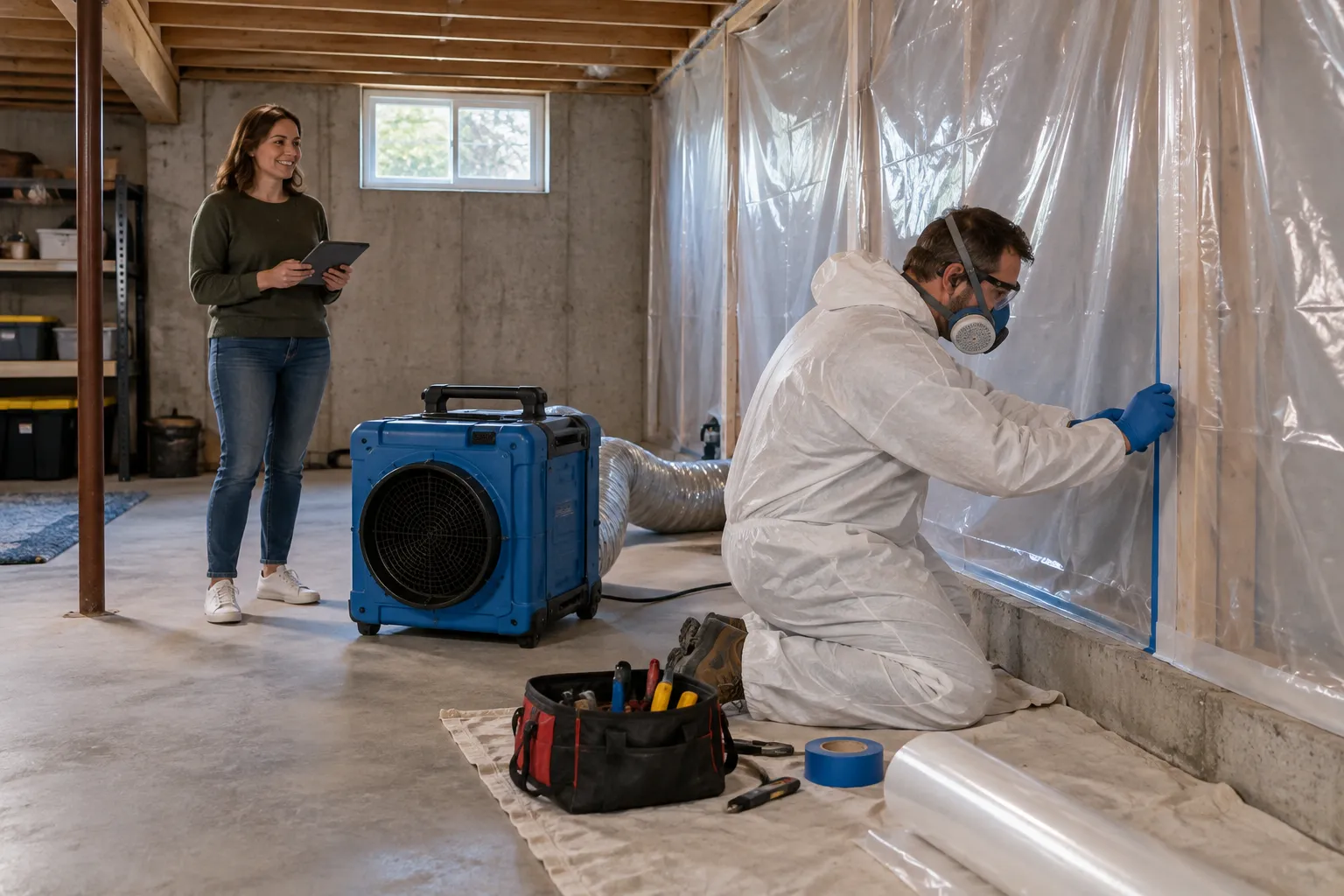
Plastic sheeting seals off the work zone. Air machines create negative pressure so spores stay inside the barrier.
Remove and clean
Porous materials with heavy growth, such as soaked drywall or insulation, are cut out and bagged. Solid surfaces are cleaned with HEPA vacuums and damp wiping. HEPA means a filter fine enough to trap tiny particles.
Dry and verify
Air scrubbers run, and surfaces are dried fully. Some providers recommend a follow-up check before rebuilding starts.
Fixing What Caused It
Removal without a moisture fix is a short-term result. Ask the provider what water source fed the mold and who will correct it. That may be a plumber, a roofer or a drainage contractor. Better ventilation, sealed gaps and gutters that move water away from the foundation all help.
Heavy snow loads and spring melt put steady pressure on roofs and foundations. Check those areas each year.
Your Belongings
Hard items like glass, metal and sealed plastic can often be cleaned. Porous items such as mattresses, carpet, books and stuffed toys are harder. If they sat near heavy growth, a provider may advise replacing them.
Photograph items before anything is moved. Some policies may cover sudden damage, so check your policy. Providers can often help document damage for a claim.
Where You Can Help, and Where You Shouldn't
You can safely do a few things. Clear the area of furniture. Fix a known dripping fixture. Run a dehumidifier. Keep records of dates, photos and repairs.
Leave the rest to a provider. That includes anything larger than a small patch, anything inside walls, and any area near your HVAC system. Professionals have containment gear, respirators and HEPA equipment that a hardware-store kit cannot match.
Questions to Ask the Provider
- Will the quote be in writing, with the scope listed?
- How will the work area be contained?
- Which materials will come out, and which will be cleaned?
- Does the plan address the moisture source?
- Is a post-work check included or available?
- Does the provider hold the licenses your area requires?
Who Does What
Specialahead Mold Help does not inspect, test or remove mold. We take your request and route it to an independent provider in our network. That provider sets the price, schedule and scope. Availability and call hours vary by provider.
If you searched for mold inspection near me or residential mold removal, this is the starting point. Request a callback to check provider availability, or send the request form.
What's Included
Containment of the work zone
Plastic barriers and air machines help keep spores from reaching the rest of the house.
Removal of damaged materials
Heavily affected drywall, insulation or trim is cut out, bagged and taken out of the home.
HEPA cleaning
Surfaces are vacuumed and wiped with fine-filter equipment to pick up loose spores.
Drying and next steps
The provider dries the area and tells you what moisture repairs or follow-up checks are needed.
What Black Mold Removal Typically Costs
These are typical U.S. ranges. Real prices vary with the size of the area, the materials involved and how hard the space is to reach. Always get a quote in writing.
| Item | Typical range | Notes |
|---|---|---|
| Small, contained area | $500 – $1,500 | One wall section or a small bathroom ceiling |
| Mid-size room | $1,500 – $4,000 | Containment and cleaning often needed |
| Basement or large area | $4,000 – $10,000+ | Depends on square footage and access |
| Drywall and insulation removal | $1,000 – $3,500 | Priced by affected area; rebuilding is extra |
| Air scrubbers and equipment | $300 – $1,000 | Often billed per day or per job |
| Post-work testing | $300 – $800 | Varies by sample count and lab |
How It Works
Send your request
Fill out the form, or request a callback to check provider availability. Share photos and what you have noticed.
We route it
Your details go to an independent provider in our network that serves your area.
Provider reviews the job
The provider asks questions, may visit, and explains the scope and the moisture source.
Compare and decide
Review the written quote, ask your questions, and choose whether to move forward.
Why Call Specialahead Mold Help
Clear referral model
We say up front that independent providers do the work, not Specialahead Mold Help.
Local providers
Requests go to providers in our network who serve the Salt Lake City area and know local housing.
Quote in writing
Ask the provider for a written scope and price before any work begins.
No obligation
Sending a request does not commit you to hiring anyone, so you can compare.
Other Services

Need black mold removal in Salt Lake City?
Describe your mold problem and request an estimate. Or use Request a callback to check provider availability. A local provider in our network follows up with you directly.
No obligationBlack Mold Removal FAQ
- Is black mold dangerous?
- Some people react to mold with coughing, irritated eyes or a stuffy nose, especially those with asthma. Color does not confirm the type. Keep the area closed off, avoid disturbing it, and talk to a doctor about symptoms.
- Can I remove black mold myself?
- A very small patch on a hard surface may be manageable with gloves, a mask and care. Larger growth, mold inside walls, or anything near your HVAC system calls for a professional with containment equipment.
- Will bleach kill black mold?
- Bleach can lighten surface stains on hard materials, but it does not reach roots inside drywall or wood. Mold often returns if the moisture source remains. A provider deals with both the growth and the cause.
Request a callback
Describe your mold problem and request an estimate. Or use Request a callback to check provider availability. A local provider in our network follows up with you directly.
No obligation