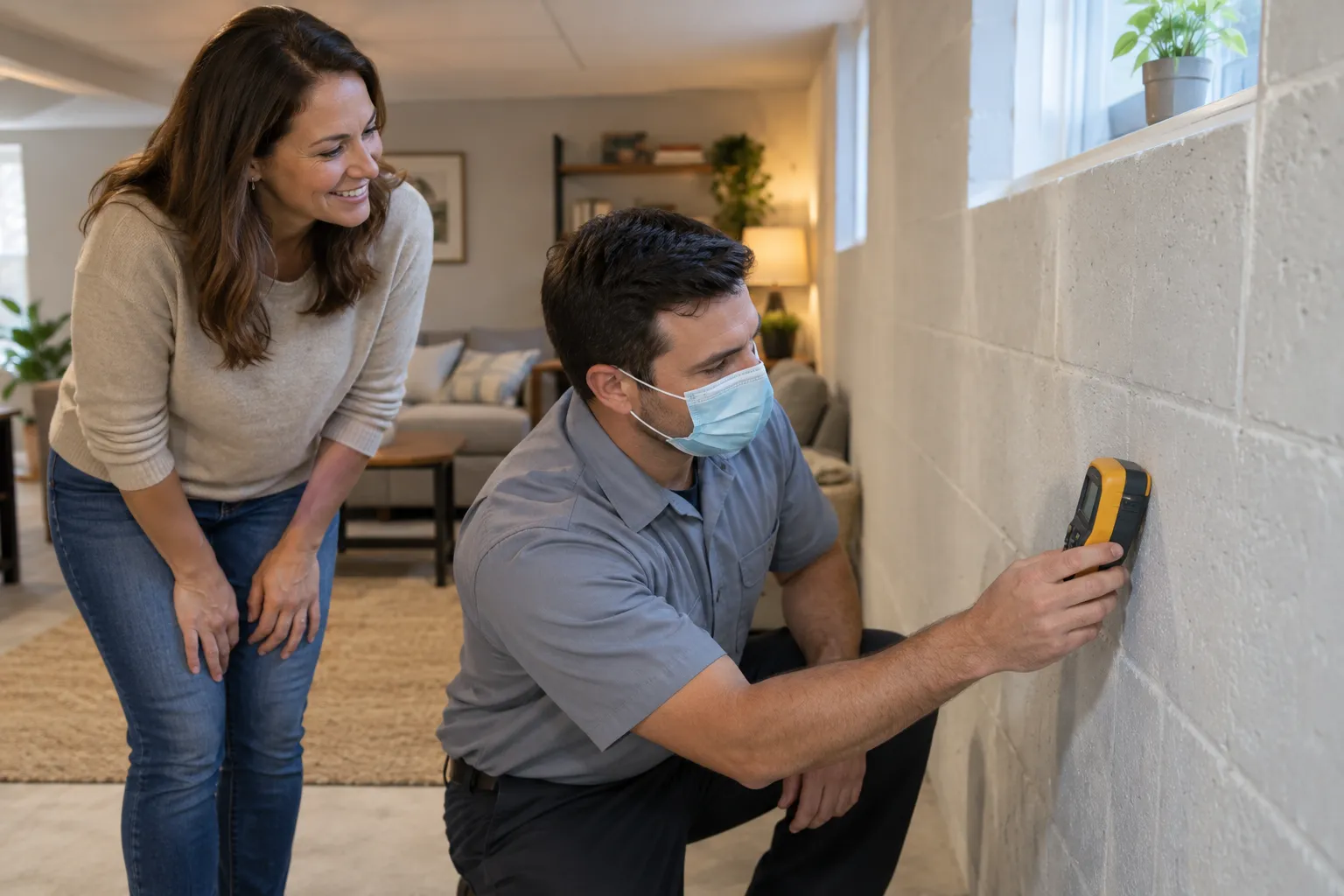
Short answers for homeowners with mold
Mold FAQ: Timing, Insurance, Prevention and Safety
FAQ
Questions and answers
- How long does mold remediation take?
- It depends on the size of the problem. A small, contained patch may take a day or two. Larger areas, wet drywall or basement jobs can run several days, because the moisture source must be fixed and the space dried first. The provider sets the schedule. Ask for the timeline in writing along with your quote.
- How soon can a provider come out to my home?
- Availability varies by provider and by season. Many providers can respond quickly, but nobody here can promise a set time. Request a callback to check provider availability, or send the estimate form. We route your request, and the provider contacts you to arrange a visit. Mention any active leak or spreading growth up front.
- Does homeowners insurance cover mold?
- Sometimes. Some policies may cover sudden damage, such as a burst pipe, but many exclude mold from slow leaks or neglected upkeep. Check your policy and ask your insurer before work starts. Providers can often help document damage for a claim with photos and notes. The coverage decision belongs to your insurer.
- Is black mold dangerous, and should I touch it?
- Black mold is a common name for dark-colored growth. Color alone does not reveal the type or the risk. Mold can irritate the eyes, nose and lungs, especially for children, older adults and anyone with asthma. Do not scrub, sand or disturb it. Keep the area closed off, and ask a provider about testing and black mold remediation.
- Can I clean mold myself?
- A small patch on a hard surface, such as tile, may be safe to clean yourself. Wear gloves, goggles and an N95 mask, and ventilate the room. Stop if the mold is on drywall, insulation or carpet, keeps returning, or comes with a musty smell and no visible source. Those cases need professional containment and equipment.
- How do I prevent mold in a basement?
- Moisture first, mold second. Keep indoor humidity below about 50 percent and check it with a hygrometer. Fix leaks quickly, clear gutters, and point downspouts away from the foundation. Spring melt and hail damage can push water into basements or behind stucco and siding. Run a dehumidifier, vent bathrooms, and look for stains after storms.
- Do I need mold testing before removal?
- Not always. Visible growth often needs fixing, not a test. Testing helps when you smell mold but see none, after a leak, or when you want a record before and after the work. Ask for certified mold testing and a written report. A provider can explain which sample type fits your home.
- Who actually does the work if I contact you?
- We route, they remove. Specialahead Mold Help is a referral service. It takes your request and passes it to an independent local provider in the network. That provider inspects, tests and does the work, and sets the price. You get a quote in writing from the provider. Specialahead Mold Help does not perform inspections, testing or removal itself.
Contact Us
Request a callback
Describe your mold problem and request an estimate. Or use Request a callback to check provider availability. A local provider in our network follows up with you directly.
No obligation